

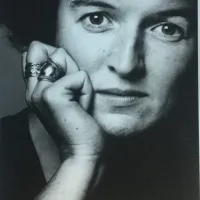
Una Watters, a Dublin-based artist with strong Ballinasloe connections, was unknown for many years following her untimely death in 1966 at 47. Recently, however, there has been a revival of interest in her work, beginning with a major retrospective at the Dublin Arts Club in 2022. The National Gallery has now received a donation of three of her paintings from a local donor, two of which were inspired by Ballinasloe and its people.
The works that have been donated to the gallery are all oil paintings: Isabella (1956), Harvest (1965) and The Red Bridge (1956). Isabella and The Red Bridge are now on display in room 15 of the National Gallery; Harvest is not currently available to view. Mary Morrissy, an aficionado of her work and one of the women who helped to bring Watters back to prominence says the newly-donated paintings show Watters: “at the height of her painterly powers. They also demonstrate her versatility of form.”
Born in 1918, Watters was a mid-century painter, designer and librarian with a varied body of work, which as critic Katy Hessel says: “ranged from rural landscapes to portraits and everyday street scenes. She also experimented confidently with Cubism.” Although she grew up and lived in Dublin, Watters developed an attachment to Ballinasloe, which, according to Morrissy, was “a home away from home” for her. Her husband, Eugene Watters (a poet and writer known as Eoghan Ó Tuairisc), was from the area, and the couple spent over 25 years holidaying in the region. “The town and its environs were a constant source of artistic inspiration for her” says Morrissy.
Of the recent donations, Isabella is a portrait of Eugene’s sister, Isa, who was from the town. The Red Bridge features the River Suck. It’s a Cubist work that doesn’t directly reflect reality but is inspired by it.
In 1965, Watters died suddenly, just as she was on the verge of greater recognition. She had designed the official symbol for the 50th Anniversary of the Easter Rising and it was actually unveiled in Ard Scoil Mhuire in Ballinasloe. The first solo exhibition of her work also took place in Ballinasloe, shortly after her death. It was curated by her husband, who chose six works to commemorate the anniversary of the Rising. The paintings hung in Cullen’s shop on Society St.
Her husband also organised a Dublin-based retrospective of her paintings in 1966. Shortly after, he gave the paintings away to family and friends. “He wanted people who knew her and loved her to have pieces of her work,” says Morrissy. However, it meant that her work was never shown in art galleries or exhibitions, and her name was forgotten until the 2022 retrospective organised by Morrissy and Watters’ niece, Sheila Smith. Hessel says: “Watters’ story is a reminder of how easily the work of artists can be lost and how thrilling it is to bring them back into the light.”
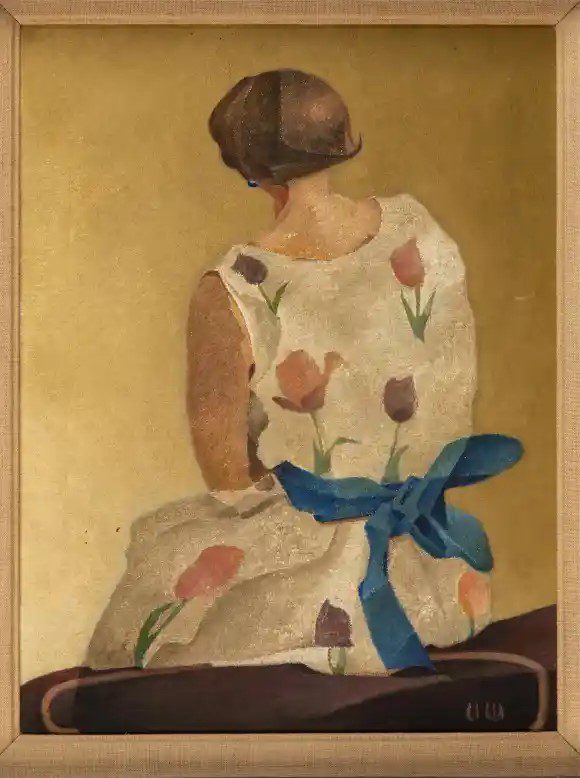
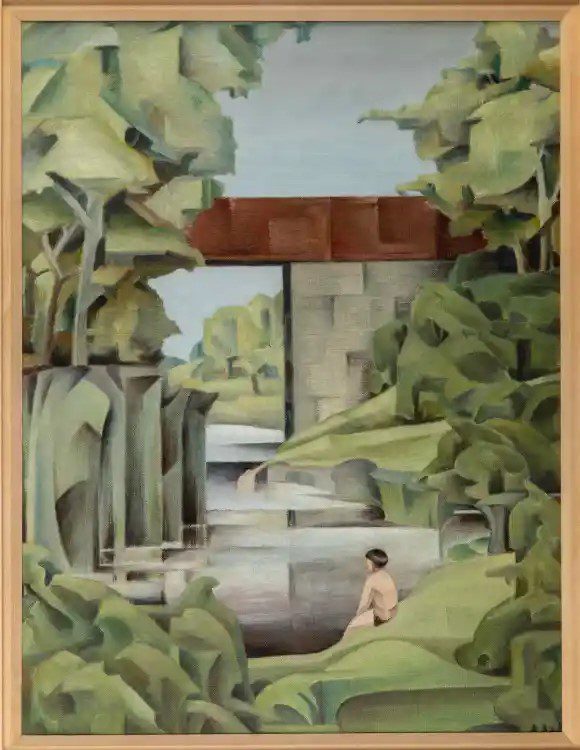
(Photo captions: Two works by Una Watters. The first, Isabella, is a portrait of Watters’ sister-in-law. The second work, The Red Bridge, was inspired by the River Suck).